Ready to Get Started?
Try Autodesk Platform Services for free by setting up an account and free trial. Explore the resources to learn about the solutions you can build using design and engineering data.
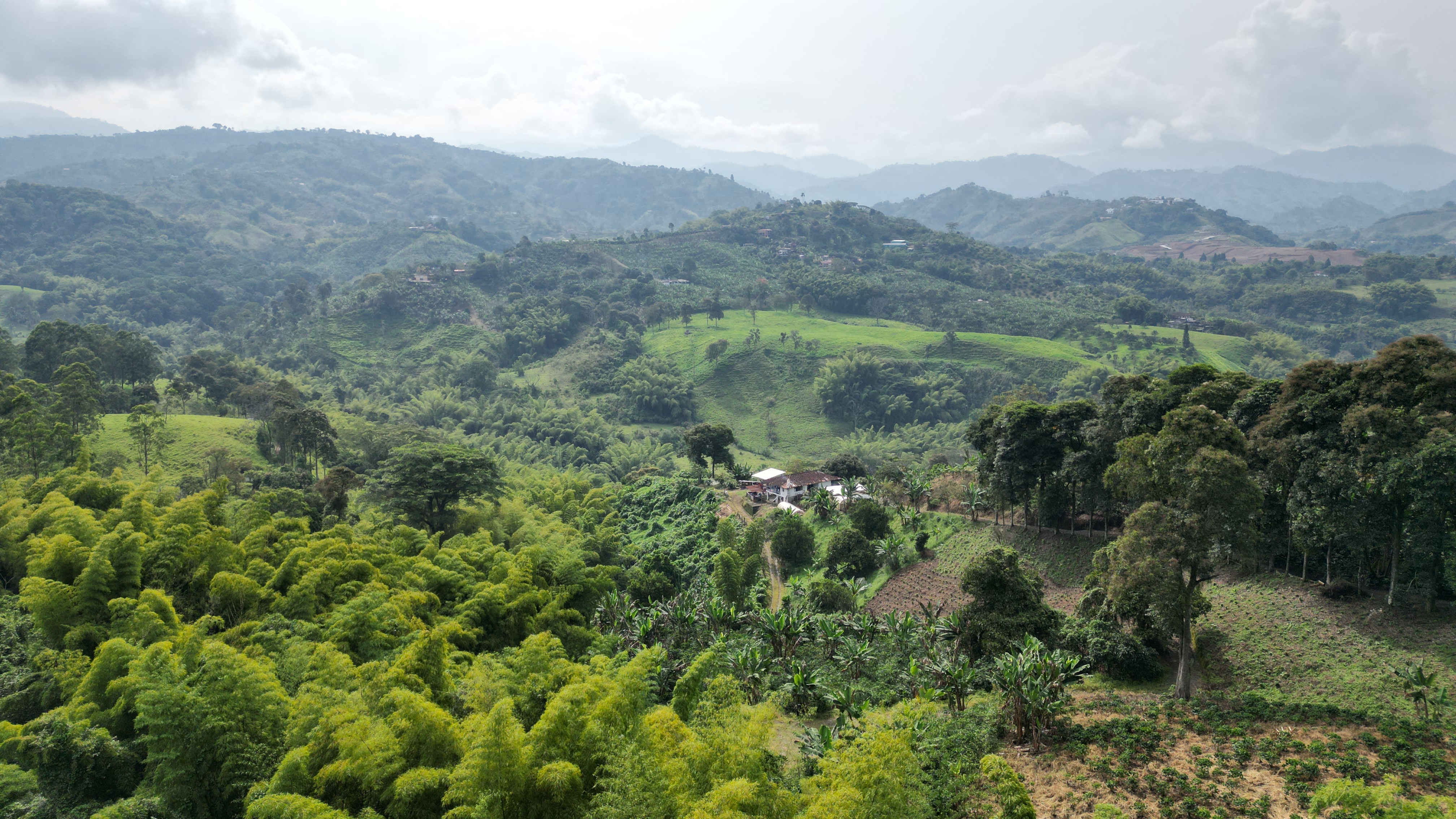
Blue Bird Coffee is a Colombia-origin roasted coffee brand cultivating and processing beans near the Nevado del Ruiz Volcano in Manizales, Colombia. Rooted in a family coffee tradition that dates back to the early 1900s, the Hurtado family later began growing coffee in the region’s fertile volcanic soils.
Today, Blue Bird Coffee is operated by third- and fourth-generation farmers Jose Fernando Hurtado and Juan David Hurtado, continuing a family tradition while applying technology to modernize coffee farming practices.
Climate change threatens Arabica coffee-growing regions worldwide; the Hurtado family has experienced an 80% decline in coffee production on their farm between 2002 and 2025. Farmers are trying to adapt to support a sensitive plant that demands moderate temperatures, seasonal rainfall, and partial shade. In a 2015 study published in the journal PLOS One, World Coffee Research reported that because of warming temperatures, half the land currently used for Arabica production will no longer be suitable by 2050. To cope, growers must tailor farming practices to deal with increased heat, drought, and extreme weather.
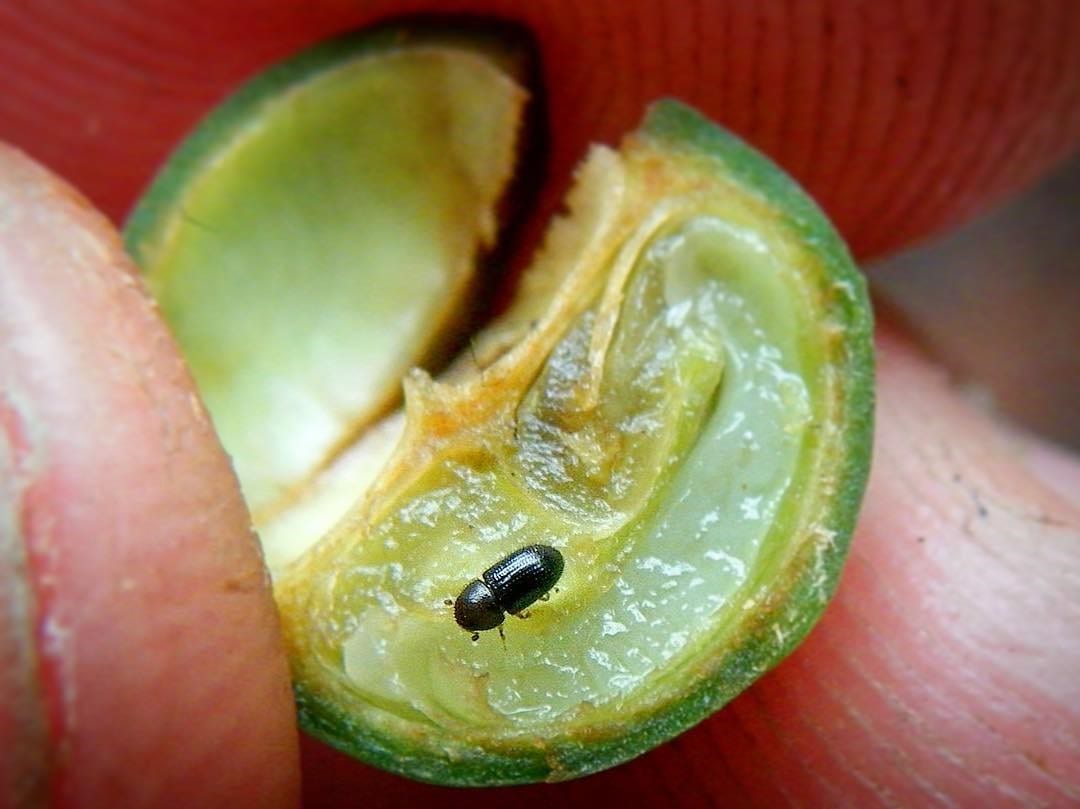
The climate problem includes the coffee berry borer. Known locally as Broca, this tiny beetle damages coffee berries, degrading coffee quality and reducing crop yield. Broca becomes more prevalent when temperatures increase even slightly. Shade from trees can cool and protect coffee plants, yet conventional tree planting relies on guesswork, with farmers hoping saplings will eventually provide enough shade in the right locations.
By using APS solutions to connect the farm’s data in the cloud, Blue Bird Coffee is combining Autodesk technology with agroforestry science to make farming decisions more precise, measurable, and scalable. Juan David Hurtado is a mechanical engineer who spent years building custom tools with APS and the Autodesk ecosystem to solve construction problems. He believed that creating a digital twin with Autodesk technology could do the same thing for his family’s coffee farm as it does for urban design: replace guesswork with data.
The twin enables precise tree planting to shade coffee plants, lowering temperatures and discouraging Broca infestations. It turns field data into actionable insights so the family can understand not just what is happening on the farm, but also where and why.
As part of an early-stage pilot using Autodesk Forma Site Design, the Hurtado family is collecting structured, geolocated field data through Forma Photos and Issues APIs. In a future phase, these datasets could be connected with knowledge databases developed by coffee research centers to generate real-time cultivation insights.
The twin operates on continuously updated geolocated field data. Every tree planted or photo taken of a blossom, disease or pest is recorded in Forma Data Management and available for analysis. The Forma Issues API — typically used for construction coordination — helps track the planting and progress of trees, the presence of diseases or pests and other metrics, such as Brix levels that measure sugar content in the coffee cherry.
Using Forma Issues API and Forma Photos API, Hurtado extracts structured, geolocated data from Forma and connects it to map applications and custom workflows. The most critical workflow involves Forma Site Design — Autodesk’s cloud-based, AI-powered site design and planning solution. It allows Hurtado to create, test, and compare dozens of site designs in minutes, incorporating real-world conditions.
Using data from timber and fruit trees planted by his father in the 1980s — including Nogal and Cedro trees — as well as banana and plantain plants, Hurtado can run tree planting simulations to visualize future shade coverage at different times of day and across seasons. These simulations reveal where mature trees will cast shade at any future time and date, before a shovel ever meets the ground.
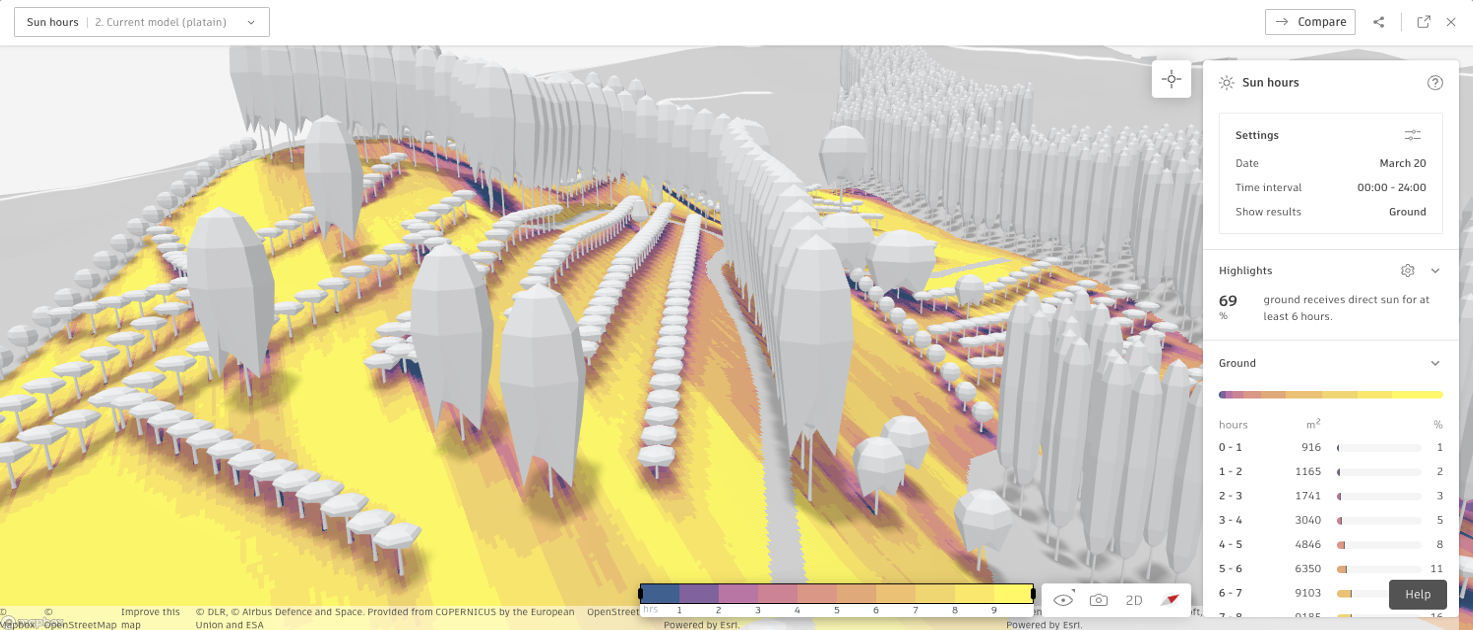
In 2024, Blue Bird Coffee planted banana and plantain plants where the simulations showed they would provide maximum shade during critical hours of peak solar radiation. The layout also factored in space for drone access, IoT sensors, and modern farm machinery. As a result, shade coverage increased from 29.5% to 42.2% — a gain of 12.7%. At the same time, coffee berry borer infestations declined by 68%. Quality measurements of the farm’s beans are moving upward, and within a few years Hurtado will be able to calculate whether the tree planting has improved yield. Notably, these quality improvements were achieved while maintaining the farm's traditional low-water washed process without experimental fermentations, leaving ample room for future improvements and more complex cup profiles.
In addition, the family has observed an increase in biodiversity, with more birds and insects returning as expanded tree cover begins to mimic a natural ecosystem. Hurtado plans to add additional instrumentation to measure long-term environmental impacts, including soil moisture retention, temperature moderation, pollination activity, and carbon sequestration.
As Blue Bird Coffee’s data collection network matures, the digital twin will track these improvements. It will also estimate and maximize the carbon sequestered in the tree plantations, generating carbon credits for the farm. Hurtado will explore Forma APIs for better measurement of real farm conditions, such as local wind patterns, actual cloudiness data, and precise terrain modeling.
After establishing a strong structured data foundation, Hurtado plans to incorporate AI workflows and MCP servers that allow farmers to interact with farm data using natural language queries. This way, they can easily generate insights that inform better decisions.
Autodesk technology is not limited to architecture, engineering, construction, manufacturing and entertainment, Hurtado said. He believes the same tools can help agriculture become more data-driven, measurable, and climate resilient.
What began as a pilot initiative has evolved into a broader research and collaboration effort focused on the future of climate-resilient agriculture. The project is now entering a phase focused on international collaboration, bringing together interested companies, research centers, and academic institutions to explore how APS, Forma, AI workflows, and connected farm data can support more sustainable coffee production at scale. The long-term goal is to make these tools and methodologies more accessible to farmers worldwide.
Check out the Forma Blog here.
“What makes Autodesk Platform Services the right choice here isn't just the APIs themselves — it's the ecosystem around them. Autodesk Forma handles field data collection, Forma Site Design handles simulation, and APS is what ties it all together and makes it useful. It's like a master brain that bridges Autodesk's world with whatever else you need to connect to. I haven't found any other platform doing this kind of thing for agriculture, which honestly makes it even more exciting.”
Juan David Hurtado, Founder and General Manager, Blue Bird Coffee