

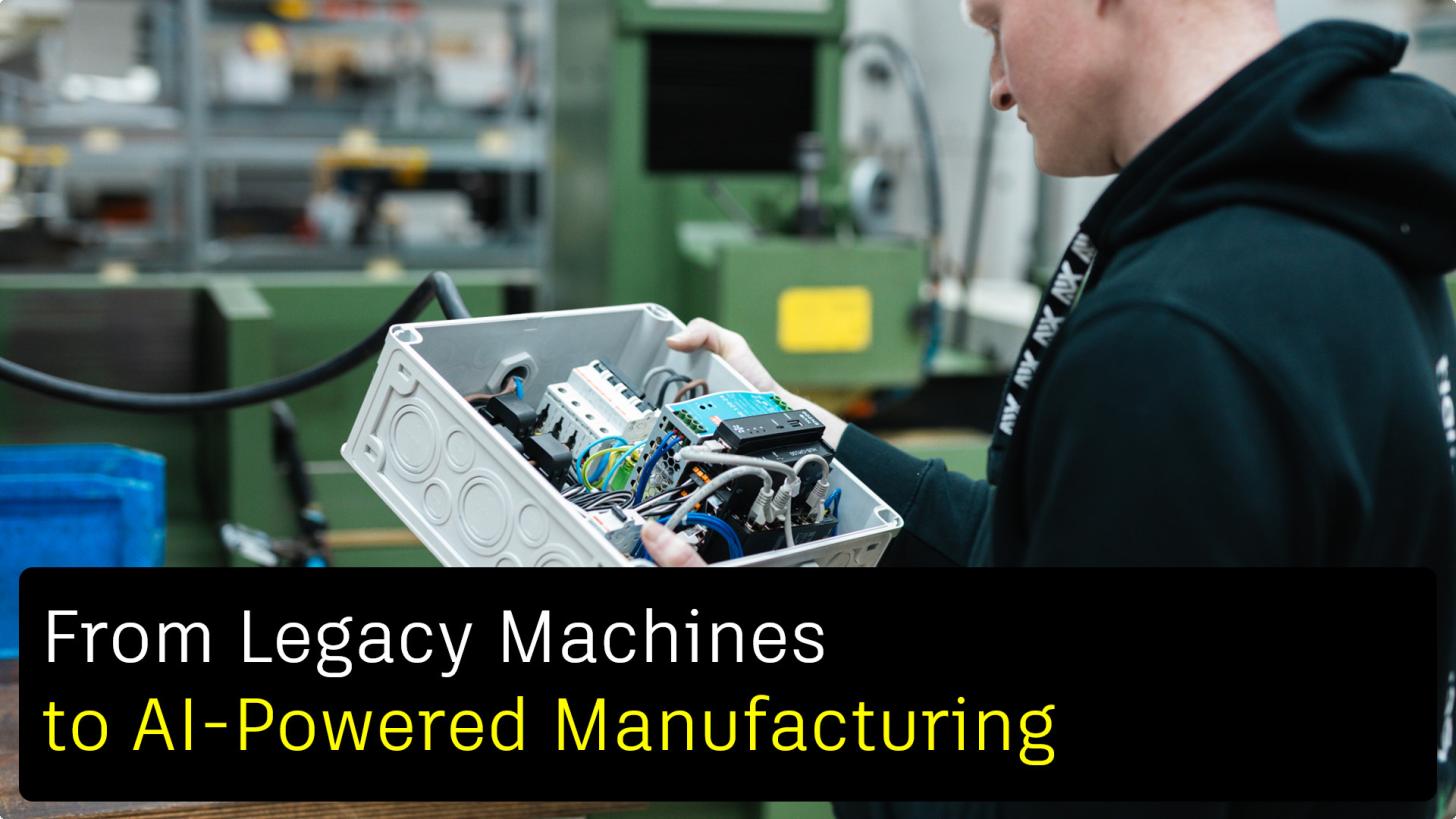
German machinery maker SITEC is using the connected data environment powered by Autodesk Platform Services to enable AI-driven insights, strengthen customer relationships, and support innovative new business models.
Earlier this year, I visited the headquarters of SITEC Industrietechnologie GmbH in Chemnitz, Germany. The location felt especially fitting: Once known as the “Saxon Manchester,” Chemnitz is one of Germany’s historic centers of industrial culture, where early cotton mills established from 1798 onward helped drive rapid industrialization and innovation.
That spirit of innovation was immediately visible at SITEC, which designs and builds production equipment and has been collecting data from its machines to rethink its entire business model.
But something surprising caught my eye amid all the shiny, modern equipment producing parts for the manufacturing industry: a very old machine that seemed more suited to a museum than a factory, still performing essential work on the shop floor.
I remember thinking that this machine must be nearly a century old. Certainly, built decades before anyone ever thought about digitization in manufacturing. And yet, it was still operating effectively in a digital environment. By equipping it with sensors, SITEC had enabled this legacy equipment to feed into the company’s connected production environment, contributing vital operational data alongside advanced, automated machinery.
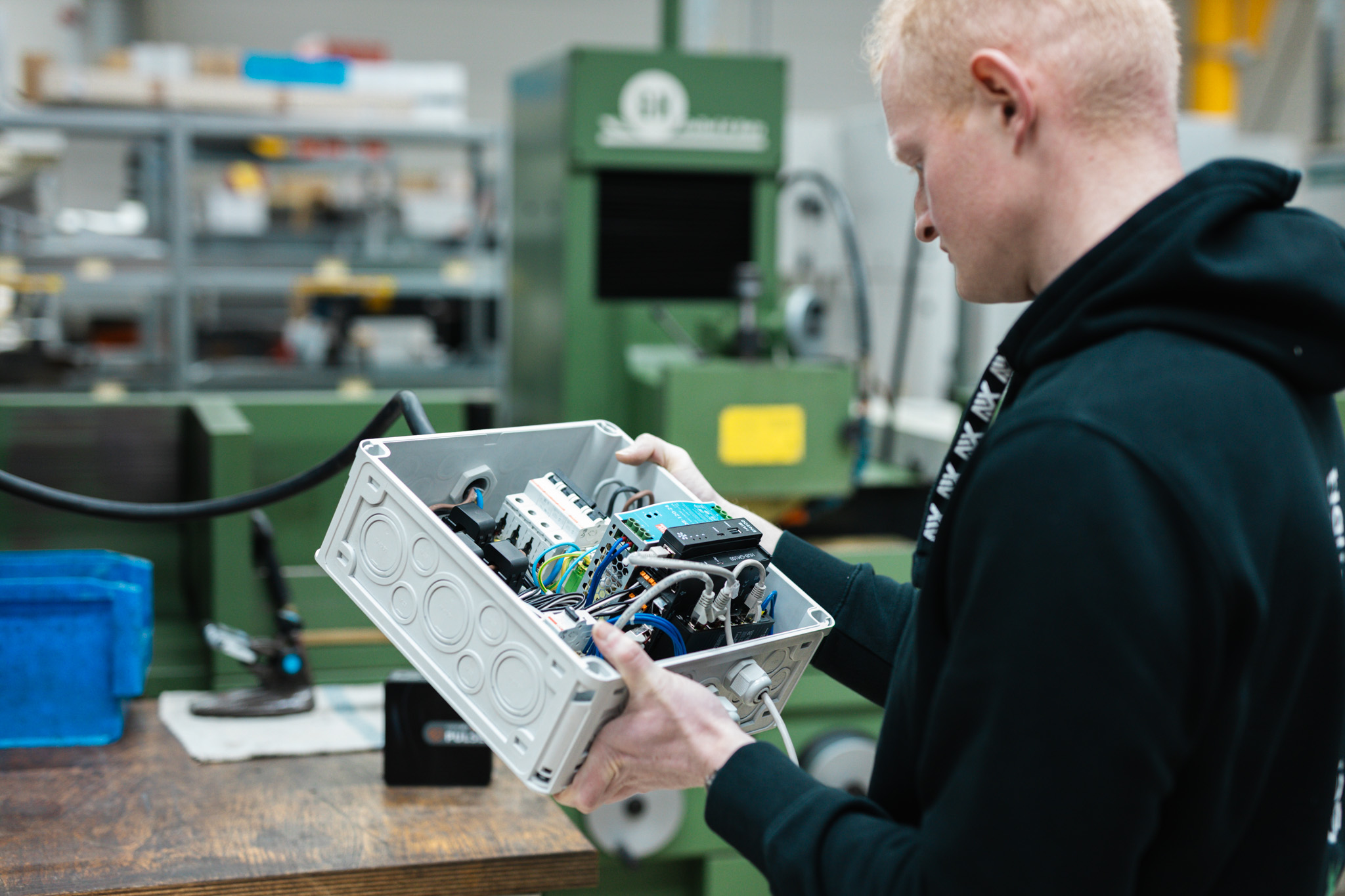
SITEC brings Legacy Machinery into the Digital Age
To me, that retrofitted, museum-worthy piece of equipment felt like the perfect illustration of how SITEC is preserving its long history of German engineering excellence while also modernizing production processes to make them more flexible, connected, and intelligent.
During my visit, I spoke with Nico Nebel, Managing Director, at SITEC. He told me that SITEC has embraced digitization and data-driven production in response to a number of changes in the manufacturing industry, including AI systems that let operators make better, faster decisions based on real-time insights. The strategic importance of data was clear in Nico’s view:
“We have to rethink what role data will play in the future. In the era of AI-enabled manufacturing, the power will lie with those who turn data into value. This is something that radically changes our business.”
That data is also becoming the foundation for AI-enabled manufacturing, where machines, service teams, and production managers can make faster and more informed decisions based on real-time operational insight.
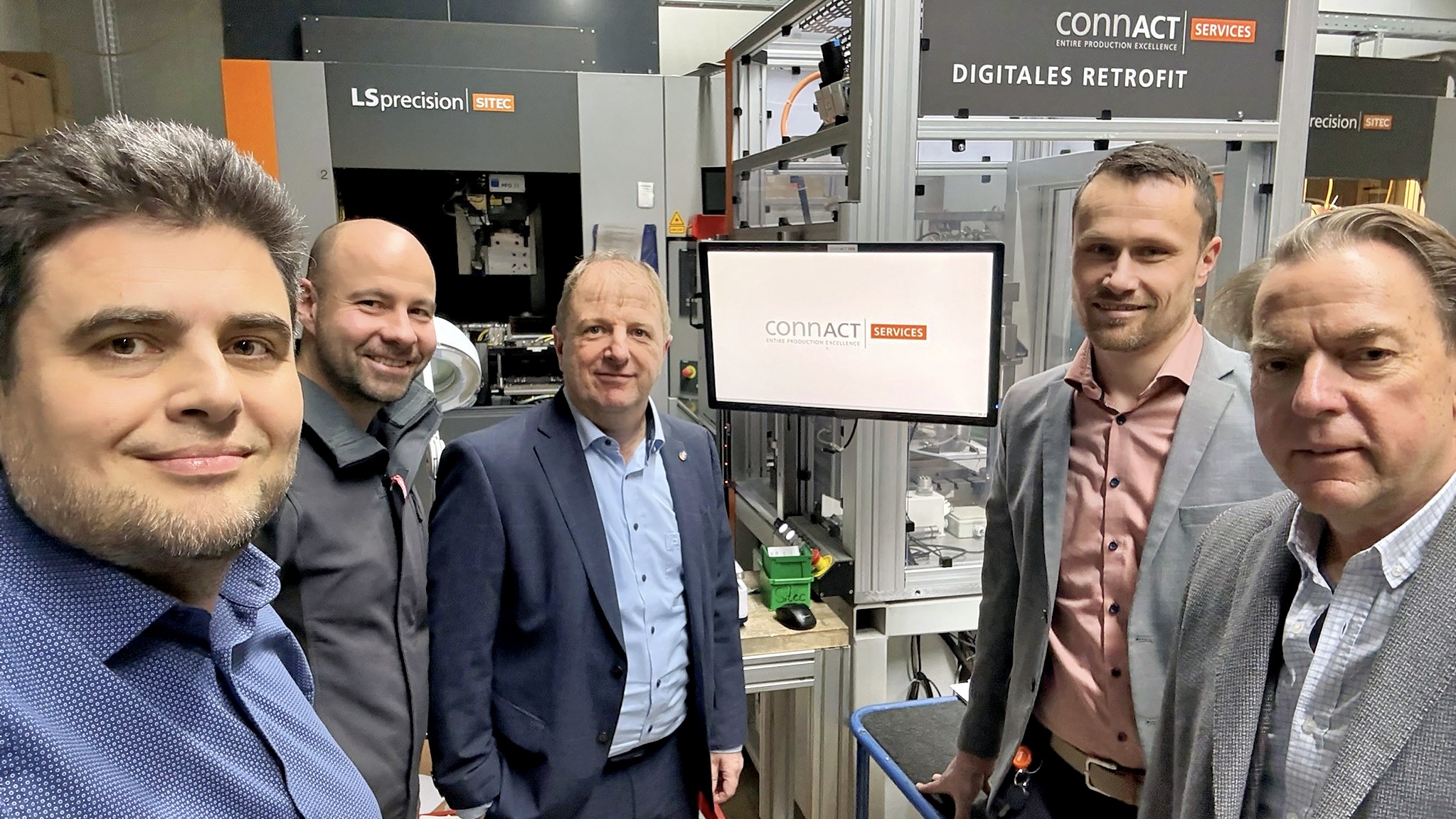
On the SITEC Shop Floor: Where data-driven manufacturing comes to life
Trust, Based on Numbers
When Nico talks about the power of data, he’s not speaking in the abstract or attempting to forecast an uncertain future. Rather, he’s reacting to specific developments that have already unfolded in his industry. For example, manufacturers are facing a more volatile production environment than ever, making it difficult to predict capacity needs. He pointed to a manufacturing environment that is becoming harder to predict:
“The time is over where manufacturers can calculate a product, knowing they will produce a million parts per year for the next 10 years. We see that the world turns faster, the outlook from production numbers becomes more and more uncertain, and you need flexible solutions for production and business.”
This uncertainty means that more of SITEC’s customers are open to new pay-per-part or pay-per-use business models. The company has actually been offering similar arrangements for two decades, for customers who wanted to manufacture at SITEC’s production facility. But starting around five years ago, the company began offering pay-per-use agreements for machines located in customer facilities around the world. This was only possible due to a purpose-built data platform called connACT SERVICES. For SITEC, usage-based models depend on a shared source of truth:
“We need a trust based on common numbers that are transparent to both us and our customers. If we charge per part, there shouldn’t be any doubt about the production numbers.”
The platform also gives SITEC the information the company needs to proactively maintain and optimize equipment at customer sites, powering the company’s connACT SERVICES business. That same data is also essential to keeping customer equipment running reliably:
“If the machinery is not the property of the customer, but our property, then we have to take care that it is well maintained. So, we also need the health status of the machine.”
Essentially, much of SITEC’s business has transformed into something similar to a machinery-as-a-service practice, moving beyond the historical business model of selling equipment once and then leaving customers to manage production and maintenance on their own.
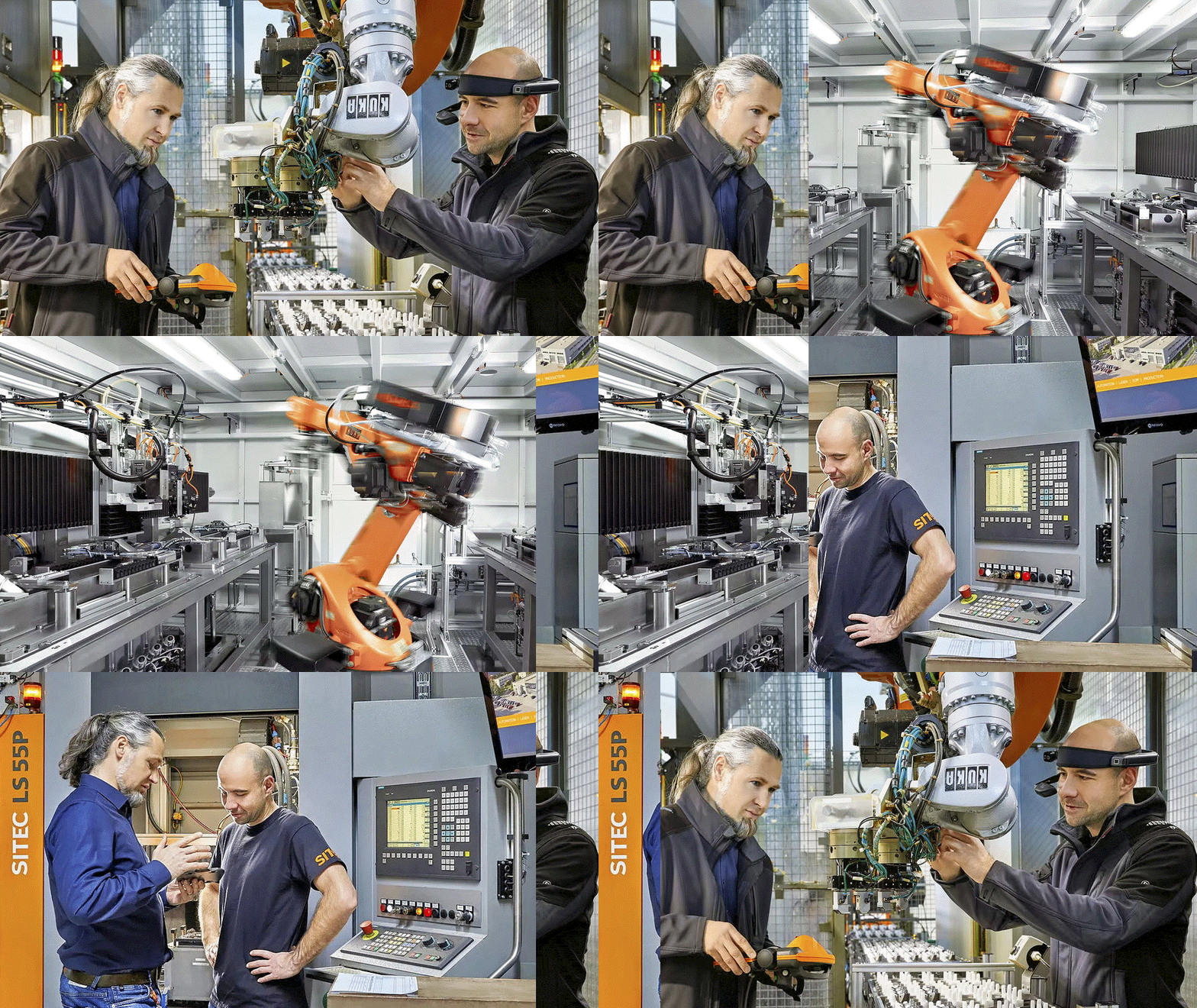
Platform thinking enables new business models
Protecting the Customer Relationship
The data generated through connACT SERVICES supports more than usage-based billing and machine health. SITEC also uses production data as the foundation for AI-enabled production management, allowing managers to ask what happened during a previous shift, whether production is running smoothly, or which specific stations require attention. If SITEC hadn’t been proactive, Nico told me, the company risked falling behind its peers. There was even a danger, he said, that customers would begin to see the company as the equivalent of an on-call service provider, rather than as a strategic partner. For Nico, the issue was not only technical, but strategic:
“If we build machines and sell them to the customer as pay-per-use or pay-per-part, then we have the data. If someone else controlled that data, we would only be a supplier. We would fall back to the second or third line, and that’s something we had to prevent. That was our motivation for building this system.”
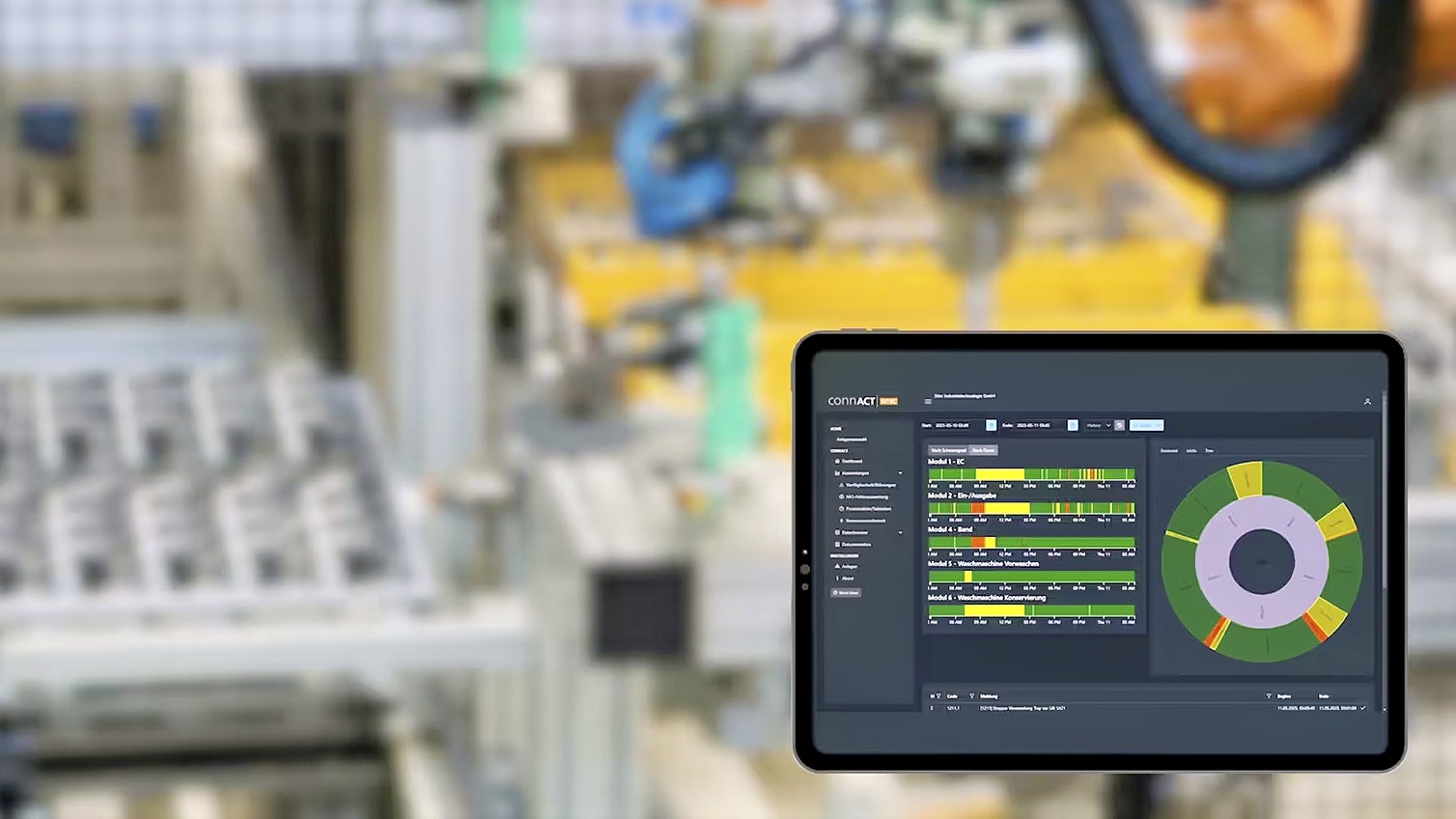
Accurate, intelligent data builds trust and unlocks new business models
Faced with similar pressures, some companies in other industries have responded by building platforms that essentially lock their customers into potentially disadvantageous relationships. SITEC took the opposite approach, addressing the issue from the customer’s viewpoint. SITEC’s own experience as a manufacturer shaped the platform from the start:
“What makes SITEC unique is that we use our own machinery for production, so we are our own customer. We have the advantage of knowing the perspective of our customers."
SITEC used this knowledge to create an open platform that integrates data from a variety of manufacturers.
Like many of its customers, SITEC uses machinery from multiple vendors in its production line. Nico said it was important to SITEC—and the customers the company serves—that operators have a unified view into production data, rather than being forced to toggle between multiple apps and dashboards from different suppliers. The ambition was broader than a SITEC-only system:
“Our vision from the very beginning was not to develop connACT SERVICES as a SITEC system, but as a system for the complete production environment."
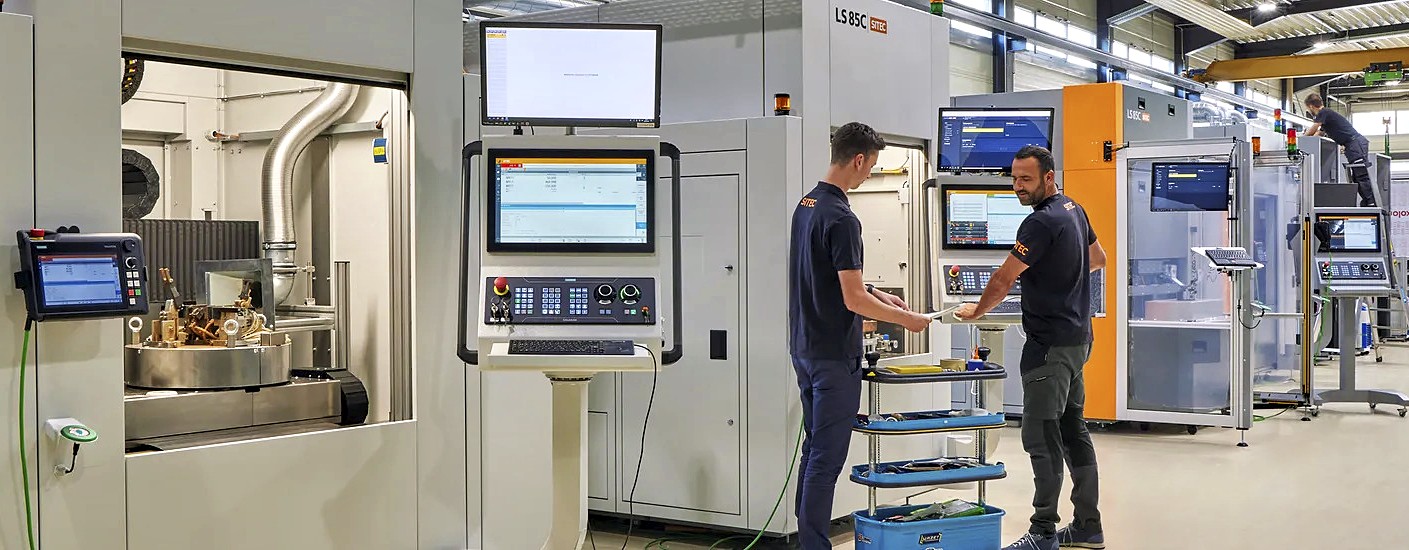
An open system for the complete production environment
A Platform built on Partnerships
To bring this vision to life, SITEC complemented its deep engineering expertise with external experts in cloud and platform services. Nico was candid about where SITEC needed external expertise:
“Our roots are in mechanical engineering. Of course, we are experienced in mechanical services, how to build and operate machinery, how to optimize equipment and production. But cloud, and platform services are not part of our core of knowledge. So, we were looking for strategic partners.”
The company engaged N+P Informationssysteme GmbH, a long-time Autodesk partner with deep expertise in software development, cloud platforms, and digital twins—and, more recently, AI. SITEC led on the machine-data side, while N+P led the build on the cloud platform. Together, SITEC and N+P used data from 3D models, live machine operations, and cloud-based workflows to create a digital twin environment, with Autodesk Platform Services (APS) unifying data from different sources. This creates a central view of machines in the field, giving service teams and customers the trusted data foundation needed for AI-assisted diagnostics, predictive maintenance, and faster decision-making. The platform also supports management of spare parts, maintenance workflows, documentation, and analytics.
A key part of this foundation is the Data Management API, which helps organize and access design data, machine documentation, versions, and metadata in a consistent way. This gives a reliable, traceable data layer for connecting 3D models, operational insights, maintenance workflows, and service information, turning fragmented production data into a trusted basis for AI-driven diagnostics, predictive maintenance, and pay-per-use manufacturing models. Björn Schuster, VP of Business Development at N+P described the value of APS in practical terms:
“Autodesk Platform Services gives us a way to connect the machine with live operational data and make that information visible in a useful way. That is what makes the digital twin valuable: It gives service teams and customers a clearer understanding of what is happening on the shop floor.”
For Nico the partnerships with Autodesk and N+P are essential to making this new model work and preparing SITEC for the future of manufacturing.
“With these partnerships, we can bring new business models to our customers and open up exciting new opportunities for the future of manufacturing.”
A Question for You
SITEC’s example raises a broader question for every manufacturer navigating the shift from isolated automation to connected, data-driven production.
- What role does connected data play in successful AI adoption across manufacturing organizations?
- And how do you expect connected data and AI to impact productivity, quality, and profitability in the coming years?
If this resonates, I’d love to continue the conversation. The future of manufacturing will be shaped not just by AI, but by the companies that know how to turn connected data into trust, flexibility, and new ways of working.