
How Digital Transformation and AI are powering one of the world’s fastest-growing construction markets
When I visited Mumbai 🕌 for the Design & Make Summit, I was struck by the powerful contrast between India’s centuries-old traditions and its rapid embrace of the latest technology. Walking through bustling streets and historic markets, I admired the artistry of handmade carpets—symbols of craftsmanship refined over generations.
But as beautiful as these rugs are, they reminded me of a critical truth: traditional methods, no matter how exquisite, cannot scale to meet the demands of a nation on the rise.

Handmade carpet in India (AI-generated image)
What’s happening in India right now is extraordinary. The country’s construction industry is booming—growing at an astonishing 14% annually between 2020 and 2024, more than double the global rate of 6%. From nationwide railway expansions spanning thousands of kilometers to bold renewable energy projects like Adani’s 50GW solar vision, the scale of infrastructure development is unprecedented.
Yet even in a nation of 1.5 billion people, labor shortages and legacy workflows threaten to slow this momentum. To continue its trajectory, India must accelerate digital transformation at a pace that matches its ambition.
Why India is leading the Digital Revolution
This need for digital acceleration was the central theme of the Design & Make Summit, where AECO, Manufacturing, and Media & Entertainment leaders came together to discuss the future of how India designs and makes. Across sessions, industry experts described how automation, integrated platforms, and AI-driven workflows are reshaping critical workflows—enabling teams to meet rising demand while unlocking entirely new levels of efficiency.
The message from the summit was clear. As Kamolika Gupta Peres, VP India at Autodesk, summarized:
“Digital transformation, AI, and integrated platforms are no longer optional—they’re essential.”
India’s most forward-thinking companies aren’t simply adopting global best practices—they’re setting new benchmarks for innovation. By embracing advanced tools, connected workflows, and scalable digital processes, they’re achieving levels of speed, accuracy, and efficiency that were previously out of reach.
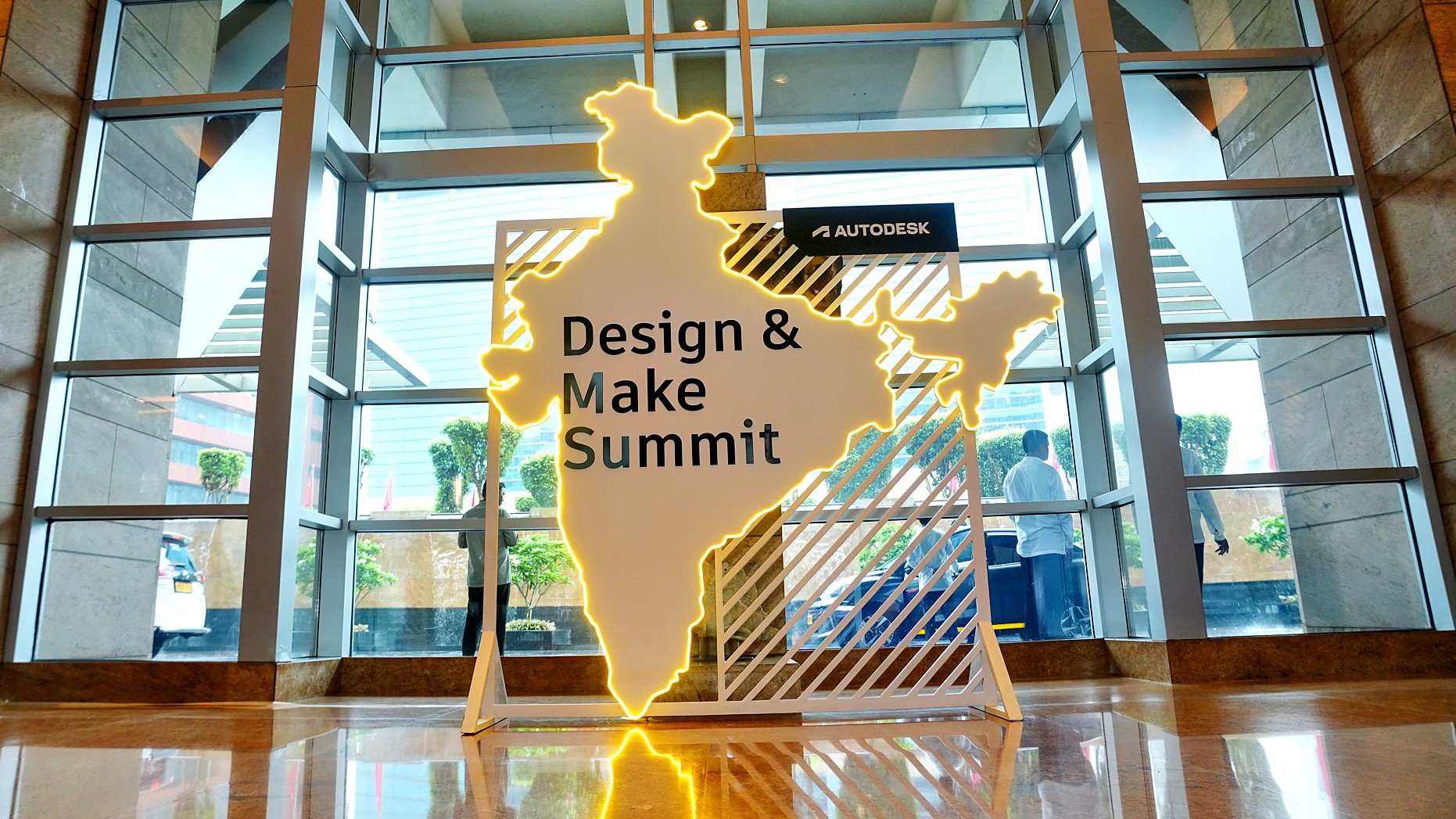
Design & Make Summit, India
Autodesk Platform Services accelerate Change
This is where Autodesk Platform Services (APS) becomes a catalyst for transformation. APS unifies siloed data and powers custom applications, integrations, and AI-driven workflows that accelerate every phase of design, construction, and operations.
Our expanding library of cloud-based APIs brings information together in ways previously impossible. For example:
- The AEC Data Model API unlocks access to Revit and BIM sources, enabling teams to browse model structures, automate quality control, and speed up cost estimation.
- Meanwhile, the Automation API enables design and engineering teams to run Revit, Inventor, Fusion, and other model-based automations at scale in the cloud, accelerating quality checks, data extraction, and downstream workflows while reducing manual effort and ensuring consistent outcomes across projects.
With APS, Indian firms are doing more than keeping up with the nation’s construction boom—they’re pioneering new ways to digitize, automate, and scale design and make processes, setting a powerful example for the world.
Bridging the Talent Gap with Technology
In conversations during the Summit, one story stood out—my discussion with Madhu Aravind, Senior Project Manager at ITC Limited. Like many Indian firms, ITC faces a growing talent gap.
“We have a huge labor shortage. At the same time, skill levels are decreasing, which you also see across the globe.”
To overcome these challenges, ITC has shifted from 2D workflows to Revit and BIM, adopted Autodesk Forma for collaboration, and even built custom integrations with Microsoft Teams to track progress and mitigate project risk.
The impact has been dramatic. During Phase 1 of the ITC Green Centre project in Bangalore, reliance on 2D, paper-based workflows did not directly generate claims but resulted in complex information retrieval and reduced transparency. These inefficiencies contributed to 142 contractor claims.
For Phase 2, ITC transitioned to an entirely paperless BIM workflow. Enhanced transparency and streamlined coordination transformed project delivery, reducing contractor claims dramatically to just two.
“Before, we were spending 20% of our time looking for documents. That challenge doesn’t exist anymore. We got to the root of the problem.”
Looking ahead, Madhu shared that AI and modern data workflows will play an increasingly important role in the company’s design processes. ITC plans to adopt AI capabilities powered by Microsoft Copilot, but must first implement appropriate safeguards to ensure accuracy and reliability.
Paving the Path to Change
Another highlight of my trip was meeting Pranav Parikh, founder of Autodesk partner 5D VDC. His company began as a BIM services provider but has since evolved into a digital transformation consultancy, helping construction firms accelerate their shift from 2D to 3D and beyond.
Today, 5D VDC leverages APS extensively, automating workflows that once required multiple manual steps. Early on, even transferring files into Autodesk Forma was manual and time-consuming. APS changed that, enabling Pranav’s team to automate the process and eliminate significant friction from onboarding.
Pranav explained that many of their customers were still relying on repetitive, multi-step manual workflows.
“With APIs, we can transform and automate the entire process.”
But he also emphasized that technology alone isn’t enough.
“What we’re doing is basically change management. That reduces friction drastically.”
His deep understanding of the local market and culture allows 5D VDC to meet firms exactly where they are. For example, since WhatsApp is the default communication tool on construction sites across India, his team used APS to build a WhatsApp integration for Autodesk Forma. This allows users to receive notifications about pending reviews and project updates directly within the app they rely on every day.
“Everything we do is to make the user journey better and accelerate adoption. You start small, and then more people accept the new workflow—it becomes a snowball effect. APS helps us build that momentum.”
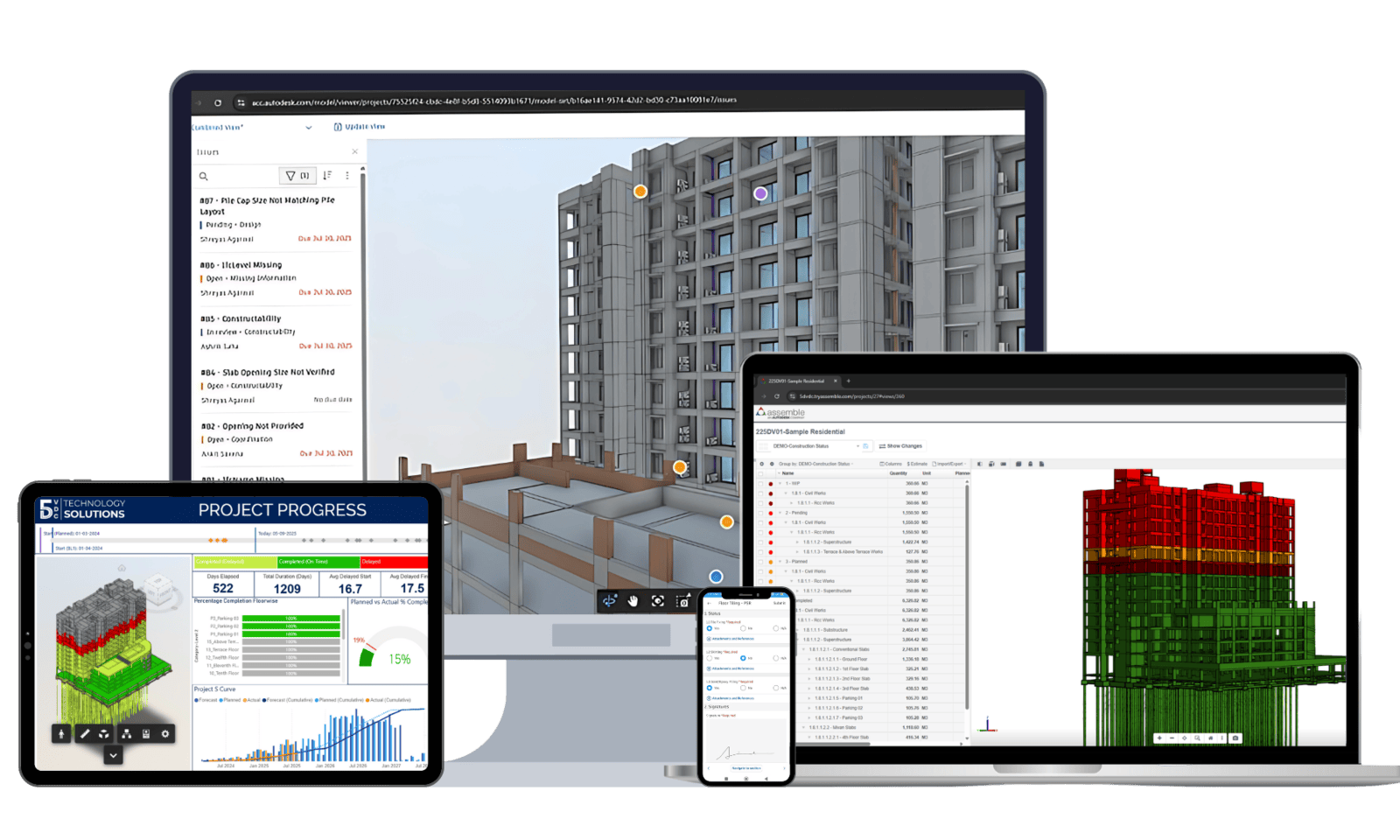
Smarter BIM, Connected Workflows, and Integrated Delivery by 5DVDC
Creativity, Craftsmanship, and the Future of Design & Make — in India and Beyond
One thing that stayed with me from this trip is the incredible creativity and craftsmanship across India. I first saw it in the work of artisans, but the same talent drives the country’s construction industry. This human creativity fuels India’s remarkable building speed—and automation, AI, and Platform Services amplify it. Together, they empower professionals to focus on what matters most: designing and making with vision, excellence, and speed at scale.
If you’re shaping the future of construction in India—or anywhere—now is the time to identify where manual workflows still slow you down and explore how platform-based automation and AI can help you move faster, smarter, and more sustainably.
Take a moment to look at one workflow in your organization that still depends on manual effort—and imagine what’s possible if you automated it on a scale. Connect with me to discuss how you could turn that idea into reality.